
 CN
CN EN
EN ES
ES RU
RU FR
FR AR
AR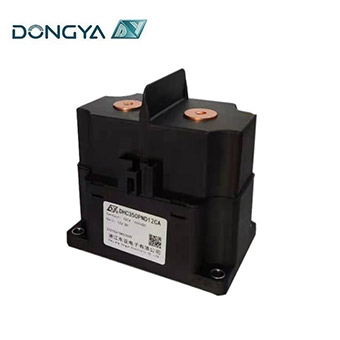
Contact Us for All Your Needs
Our professional team will be online to provide you with the most suitable products for you.


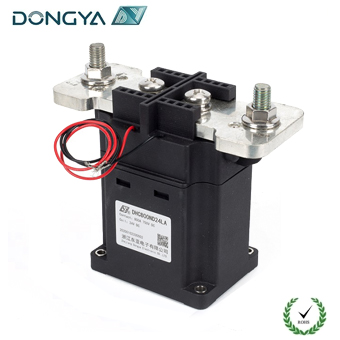
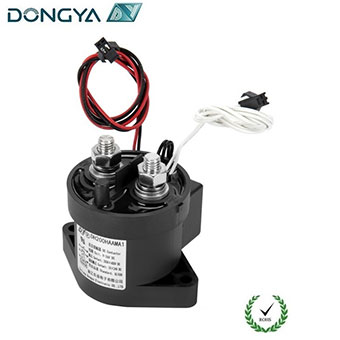
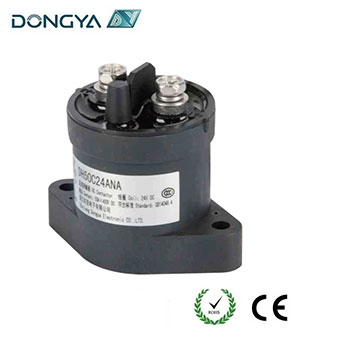
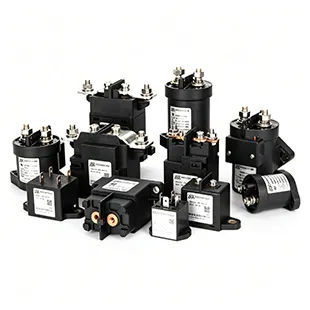
You’re driving down the highway. The battery management system detects an insulation fault—something that shouldn‘t happen. In milliseconds, the Battery Disconnect Unit must sever the connection between the battery pack and everything else. That’s its job: to be the emergency shut-off valve for high-voltage electricity. And the component that actually makes this physical break happen is the High Volt. DC Contactor—a specialized switch engineered to handle thousands of amps at hundreds of volts without welding shut or catching fire.
But here‘s what most buyers don’t realize: not all switching technologies are created equal. And the choice you make for your BDU directly impacts everything from vehicle safety certification to long-term maintenance costs.
Think of the BDU as the high-voltage circuit breaker panel for an entire EV. Located on top of or inside the battery pack, this unit houses contactors, fuses, current sensors, and pre‑charge circuits—all working together to manage power flow during driving, charging, and regenerative braking. But the most critical moment for any BDU isn‘t during normal operation. It’s during the unexpected.
The BDU must react to thermal runaway, collision damage, short circuits, and insulation breakdowns. In a crash scenario, the high-voltage isolation has to happen instantly—before first responders arrive, before the battery‘s internal temperature spirals out of control. This is where the real engineering challenge begins.
A standard relay trips under low voltage and low current. A BDU contactor, by contrast, must interrupt live DC current at 400V, 800V, or even higher. DC current doesn’t have the natural zero‑crossing point that AC current does, which means the electric arc generated when contacts open doesn‘t self‑extinguish. It just keeps burning—melting contact surfaces, generating plasma, and potentially starting a fire.
That’s why the switching device inside your BDU is arguably the most safety‑critical single component in the entire EV. And it‘s why engineers spend sleepless nights spec‑ing the right one.
Let’s put some numbers on the table. In 2025, Singapore recorded four EV fires—half of them linked directly to high-voltage battery faults. Globally, high-voltage system failures account for approximately 20% of EV fire incidents. And once a fire starts, EVs can burn more intensely and for longer than internal combustion vehicles, with a real risk of reignition.
Most of these incidents trace back to one thing: the inability to isolate the battery fast enough and cleanly enough before thermal runaway propagates.
When a short circuit occurs, fault current can surge to 5,000 amps or more within microseconds. The switching device in your BDU has to:
•Detect the fault (BMS handles this part)
•Physically open the main contacts (contactors do this)
•Extinguish the arc that forms instantly
•Maintain electrical isolation even as contacts degrade
A contactor that fails any of these steps becomes a permanent failure point. If the contacts weld shut, the battery stays connected. If the arc chamber can‘t quench the plasma, the contactor vents hot gas—or worse, catches fire itself.
So what separates a BDU that quietly does its job from one that becomes tomorrow’s recall headline?
The EV industry is currently at a crossroads. On one side, you have traditional electromechanical contactors—gas‑filled or magnetically blown switches that have been proven over decades of use. On the other side, you have solid‑state contactors—semiconductor‑based switches with no moving parts, microsecond response times, and theoretical lifespans exceeding one million cycles.
Solid‑state sounds like the obvious winner, doesn‘t it? No contact wear, no arcing, no audible clicking. Some manufacturers now claim up to 50% weight reduction and 80% smaller footprint compared to traditional BDU assemblies. And solid-state switching can cut fault current in microseconds instead of the 10–50 milliseconds that mechanical contactors require.
So why hasn’t every OEM switched already?
The answer is conduction losses. A mechanical contactor has contact resistance below 0.2 mΩ—barely measurable. A solid‑state switch, even with advanced silicon carbide MOSFETs, can have ten times higher on‑state resistance. Under normal driving loads, that difference translates to extra heat that needs active cooling. In a BDU already crammed into tight battery pack real estate, adding cooling systems isn‘t trivial.
There’s also the cost gap. QYResearch estimates the global renewable‑energy high-voltage contactor market at approximately $400 million in 2025, growing at a CAGR of 10.1% to reach $777 million by 2032. Solid‑state alternatives remain significantly more expensive per unit, though prices are expected to decline as manufacturing scales up.
For most EV and energy storage applications today, gas‑filled, hermetically sealed contactors remain the pragmatic choice. They offer proven reliability, predictable failure modes, and no surprises when you ramp up to full current. Manufacturers like DONGYA have spent years perfecting these devices for real‑world conditions—where vibration, temperature extremes, and moisture are daily realities, not lab curiosities.
When you browse our product lineup, you‘ll notice that we prioritize ceramic brazing technology and hydrogen‑filled arc chambers—the same engineering principles that major automotive suppliers rely on. These features aren’t marketing fluff. They directly address the three things that kill ordinary contactors: contact oxidation, arc residue buildup, and thermal runaway under repeated switching.
Explore our range to see how we‘ve optimized each model for specific voltage platforms—from 400V passenger EVs to 1500V commercial trucks and energy storage systems.
Here‘s where the conversation gets personal. No two BDU architectures are identical. Some OEMs use a dual‑contactor design with positive and negative isolation for redundancy. Others integrate the pre‑charge circuit directly into the main contactor assembly. Still others are moving toward BDU‑BMS integration that eliminates separate enclosures entirely.
Learn how modular contactor designs accommodate these differences without forcing you to redesign your entire power distribution layout.
We‘ve worked with clients who needed:
•Coil voltage variants for 12V and 24V architectures on the same production line
•Auxiliary mirror contacts for functional safety feedback (ISO 26262 compliance)
•Custom terminal orientations to fit impossibly tight battery pack geometries
•Extended electrical endurance for vehicles that spend more time DC fast‑charging than sitting idle
These aren’t edge cases. They‘re everyday requirements from engineers who know that off‑the‑shelf components rarely fit off‑the‑shelf designs.
When you see our customization capabilities, you’ll understand why we treat every inquiry as a fresh engineering conversation—not a catalog order.
If you‘re designing a BDU today, start with your worst‑case fault scenario. Ask yourself:
What’s the maximum short‑circuit current your system can deliver? (Specify a contactor with short‑time withstand ratings above that number.)
How often will the contactor switch under load? (Some EVs only need a few thousand load disconnects over their lifetime. Others—especially fleet vehicles with daily DC charging—need tens of thousands.)
Do you need bidirectional switching for V2G applications? (Some contactors are polarity‑sensitive. Others aren‘t.)
What functional safety level does your ISO 26262 analysis require? (Mirror contacts aren’t optional at ASIL C/D.)
Explore our product lineup to match your requirements against our technical specifications.
And don‘t forget thermal management. A contactor that’s properly sized for continuous current but crammed into a dead‑air pocket will derate faster than you expect. We‘ve seen contactors fail prematurely, not because the device was flawed, but because the busbar design created localized hotspots.
The Battery Disconnect Unit is the last line of defense between a functional EV and a catastrophic failure. And the switching device at its core—whether you call it a contactor, a relay, or something else entirely—deserves more attention than a footnote in your BOM.
Check out DONGYA’s full contactor lineup if you want to see how we approach this problem: ceramic seals, gas‑filled chambers, optional auxiliary contacts, and real‑world endurance testing.
The industry is moving toward 800V and 1200V architectures. Solid‑state will eventually take a share in specific niches. But for now, the workhorse that keeps millions of EVs safe on the road every day is still the gas‑filled, hermetically sealed High Volt. DC Contactor—engineered with precision, built to last, and designed for the moment when milliseconds matter most.
GET A QUOTE