
 CN
CN EN
EN ES
ES RU
RU FR
FR AR
AR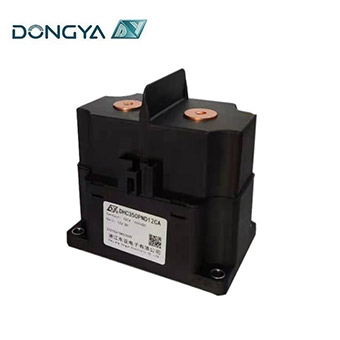
Contact Us for All Your Needs
Our professional team will be online to provide you with the most suitable products for you.


The coil voltage of an electromagnetic power switch is one of the most frequently overlooked parameters during replacement or system design. On a schematic, the difference between 12 V, 24 V and 48 V can look like a minor detail. In practice, applying the wrong coil voltage to a switching device is a fast track to insulation damage, contact welding, or a control circuit that refuses to engage at all. The following sections explain how to match the coil to the system voltage without relying on guesswork.
The coil inside a magnetic switching device creates the electromagnetic force that pulls the contacts together. It is wound to operate within a narrow voltage range, typically ±10 % of the rated value. When the supply voltage stays inside that window, the coil generates enough magnetic force to close the contacts firmly and hold them without excessive heat. When the voltage drops below the window, the contact pressure becomes unreliable – the contacts may chatter or weld due to high electrical resistance. When the voltage exceeds the window, the coil draws more current than the winding insulation can dissipate, and the temperature rise shortens the device’s life, sometimes to a matter of minutes.
12 V circuits are standard in automotive starter systems, ride‑on floor machines, small solar charge controllers and some recreational vehicles. The advantage is a wide choice of components and low cost; the drawback is that voltage drop in long cable runs can cause unreliable pull‑in.
24 V is common in medium‑duty electric vehicles (scissor lifts, walkie forklifts, golf carts), marine equipment and industrial control panels. A 24 V coil draws half the current of a 12 V coil for the same mechanical force, which reduces wiring gauge requirements and heat.
48 V systems are increasingly used in telecom power supplies, mild‑hybrid electric vehicles and e‑mobility platforms. The higher voltage permits even lower current and can simplify battery configurations, but it also places greater demands on coil insulation and usually requires suppression diodes to protect the control circuit from back‑EMF spikes.
Choosing the correct coil rating is not simply a matter of reading the battery label. If a DC‑DC converter supplies a stabilised 12 V from a 48 V traction battery, the coil must be 12 V – not 48 V. When evaluating magnetic switching components offered in 12 V, 24 V and 48 V coil ratings, verifying the actual voltage at the coil terminals under full load is more reliable than relying on a one‑line diagram.
A nominally 12 V lead‑acid battery can sit at 12.7 V when fully charged and climb to 14.4 V during charging. A 24 V battery under charge can reach 28.8 V. If the coil is specified only for the nominal voltage, it may be operating near its upper tolerance limit every time the battery charges.
The safe approach is to measure the voltage at the coil connection point during three conditions: normal operation, charging (if applicable) and the lowest battery state the machine will see. Then select a coil whose rated voltage plus its tolerance band comfortably covers that full range. For example, if the measured voltage varies from 11.5 V to 14.2 V, a 12 V coil with a ±10 % tolerance (10.8 V–13.2 V) would be stressed at the high end. A coil with a wider tolerance or an alternative voltage rating (e.g. 14 V, if available) would be a better fit.
Every inductive coil produces a reverse voltage spike when the current is interrupted. In a simple switch‑controlled circuit, this spike can reach several hundred volts and damage the contacts of the controlling relay or PLC output. A suppression diode across the coil is standard practice; the diode must be rated for the coil current and reverse voltage. Note that the diode introduces a small delay in contact opening, which may need to be considered in fast‑switching applications.
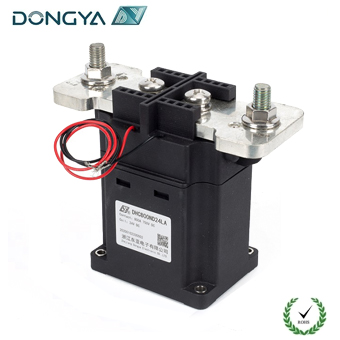
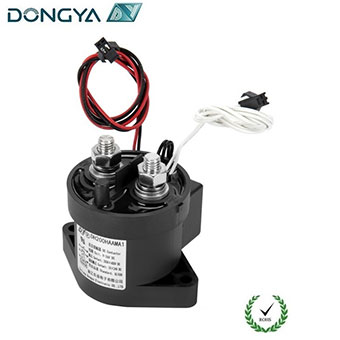
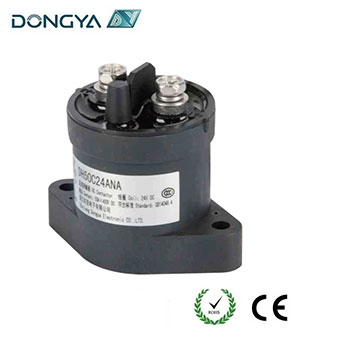
For battery‑powered equipment where every watt‑hour matters, magnetic latching devices offer an alternative. These use a permanent magnet to hold the contacts closed after a brief coil pulse, eliminating the continuous coil current and associated heat. This technology is increasingly used for battery isolation in electric vehicles and energy storage systems. Suppliers such as DONGYA provide latching and non‑latching magnetic units in 12 V, 24 V and 48 V coil configurations, giving design engineers the flexibility to match the switching element to both the power budget and the control architecture.
One of the costliest mistakes in fleet or panel maintenance is standardising on a single coil voltage across all equipment when the actual systems differ. An inventory stocked only with 24 V coils will cause repeated failures when installed in 12 V machines, and vice versa. The cost of keeping two or three voltage variants in stock is small compared with the cost of unscheduled downtime or a burnt‑out control circuit.
When ordering a replacement, read the coil rating printed on the original unit rather than relying on memory or a generic service manual. The rating is usually stamped on the housing or shown on a label. If the original is illegible, measure the control voltage as described above and select accordingly.
Some DC coil assemblies are polarity‑sensitive, particularly if they include an integrated suppression diode or an economiser circuit. Reversing the coil connections in such a device will short the diode immediately, often destroying it and possibly damaging the coil driver. The correct polarity is always marked on the device or its datasheet. Even if the coil itself is not polarity‑sensitive, the suppression diode makes the whole assembly directional.
For applications where polarity may be reversed during maintenance – for example, in vehicles where battery terminals can be swapped accidentally – consider using a switching element without an integrated diode and mount the diode externally where it is clearly visible and easy to replace.
Selecting the right coil voltage becomes straightforward when it is treated as a measured specification rather than a guess. Starting from the actual system voltage, factoring in the charge‑state variation, and then matching the coil rating to that range avoids the most common failure modes. For those who need to compare a full range of DC switching products with clearly documented coil ratings, current capacities and certifications, checking the manufacturer’s data sheets against the measured control voltage is the most reliable path to a long‑lasting installation.
GET A QUOTE